
The post-pandemic era has ushered in a shift in societal norms, particularly within the workplace. This transformation is intricately woven into the fabric of our lives, propelled by a period of rapid technological advancements. Gone are the days of the traditional 9-to-5 office job being the sole route to professional success. Instead, an increasing number of individuals are seeking alternative work patterns, such as compressed hours or a 9-day fortnight when evaluating potential employers. In a landscape marked by diverse preferences and evolving needs, the question arises: is wholeheartedly embracing hybrid work styles the key to organisational prosperity?

Christine Hume, Unsplash
Defining Hybrid Working
The benefits of hybrid working are significant, encompassing more flexibility, time saved on commuting, and an amplified sense of autonomy. It enables individuals to structure their workdays in alignment with their peak productivity hours and personal commitments.
“hybrid working is a versatile work arrangement that harmonises in-office and remote work. It empowers employees to exercise choice regarding their work location and schedule, fostering a more customised and adaptable approach to their professional lives”
ChatGPT, October 2023
Moreover, at the enterprise level, hybrid working has played a pivotal role in driving substantial cost reduction initiatives through the downsizing of physical office space. Undeniably, it’s evident that hybrid working, in one form or another, is firmly entrenched as a fixture of the modern work landscape.
Work/Life Integration vs. Work/Life Balance

Dominik Hofbauer, Unplash
Work-life integration is a concept that centers around the harmonious merging of personal and professional life, enabling individuals to manage both aspects without detrimental interference. In contrast to the conventional idea of work-life balance, which implied a strict demarcation between work and personal life, each with its designated time frame, the concept of integration has gained substantial traction in the modern workplace. Hybrid working facilitates this integration by allowing employees to seamlessly blend work and life components. However, it’s not devoid of challenges. The blurring of boundaries between work and personal life can lead to stress, burnout, and the overwhelming sense of being constantly ‘on.’ With hybrid working potentially pushing us further into the realm of work/life integration, it’s imperative to explore effective strategies for managing this situation.
Work/Life Integration: Making It Work for You

Dillon Shook, Unsplash
Before examining ideas on the successful implementation of a hybrid working strategy, it’s essential to consider the principles underlying how work/life integration can bring a multitude of benefits to employees. How can we harness it to mitigate stress, boost job satisfaction, elevate work productivity, nurture employee loyalty, and cultivate a healthier overall lifestyle? Realizing these advantages requires a significant degree of self-discipline and a mutual understanding of boundaries between individuals and their managers.
Guidelines and parameters play a pivotal role in this context. For example, establishing specific intervals when work pauses is essential. It’s worth noting that this pause doesn’t necessarily signify the end of the workday; it can denote designated segments during the day, especially in cases where hybrid working arrangements accommodate different time zones. What’s clear is that a foundation of openness and flexibility is essential to make this integrated approach effective. Furthermore, effective communication serves as a linchpin in alleviating the pressures that may arise from work/life integration. To unlock the full potential, it’s crucial to take charge of your schedule, set boundaries aligned with your priorities, employ time-blocking strategies, manage distractions, and ensure efficient communication to convey your availability to colleagues.
Successful Implementation of Hybrid Working
At first glance, the advantages of Hybrid Working and the effective integration of work and life seem abundantly clear. So, why isn’t it already an accepted norm? Why should we even contemplate an implementation plan, shouldn’t it naturally evolve? While organisations that actively support hybrid working are often seen as more attractive employers and leaders in adapting to the evolving needs of their workforce, there’s a caveat – it needs to be managed.
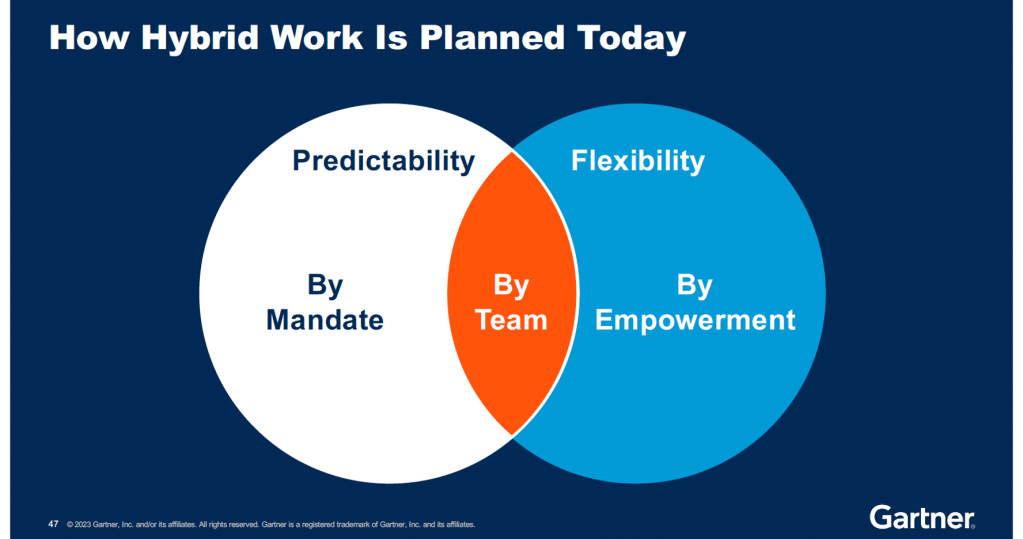
We’ve witnessed certain organizations cease their hybrid work programs, both planned and organic, with a return-to-office mandate. Research from Gartner indicates that this isn’t a guaranteed path to success, but neither is complete laissez-faire. The sweet spot lies in a managed approach, where teams collaboratively decide on the number of days they spend in the office and the purpose behind those days. This strategic balance ensures that the benefits of hybrid working and work/life integration are maximized while maintaining organizational coherence.
Enablers
Let’s now examine some key drivers for achieving success with hybrid workstyles and effectively implementing work/life integration to reap their benefits:
1. Leveraging Technology: Modern technology plays a pivotal role in the success of hybrid working. Collaborative tools, communication platforms, and project management software empower individuals and teams to connect, collaborate, and thrive, irrespective of their physical location.
2. Embracing Change: Hybrid working and work/life integration necessitate a significant shift in mindset and company culture. Encouraging adaptability and wholeheartedly embracing change can result in increased job satisfaction and overall well-being for both employers and employees.
3. Strong Leadership: A leader-led approach is vital. Recognizing that different generations have distinct needs, it’s crucial to assess the demographic makeup of your leadership team and how they apply the ground rules for both hybrid working and work/life integration.
4. Monitoring Warning Signs:These include recognising signs of isolation, difficulties in maintaining work boundaries, and blurred lines between personal and professional life among your teams. Identifying and proactively addressing these challenges is pivotal for optimising the hybrid working experience.Hybrid working undoubtedly offers numerous benefits, but it’s equally important to be vigilant about potential challenges and to harness the enablers of success to ensure a harmonious and productive work environment.
Reflections

Jon Tyson, Unsplash
With the increasing prevalence of hybrid working, it is imperative to remain agile and competitive in an ever-evolving job market. The work environment is undergoing a rapid transformation, with hybrid working and work/life integration playing pivotal roles at the forefront of this evolution. It’s crucial not to underestimate the profound impact these changes can have on portfolio planning. By comprehending these concepts, wholeheartedly embracing their benefits, and proactively addressing the challenges they present, both individuals and organizations can effectively navigate this new frontier. This will result in enhanced productivity, elevated job satisfaction, improved employee retention, and a more attractive stance in recruitment efforts.
 What With These Feet
Leave a comment