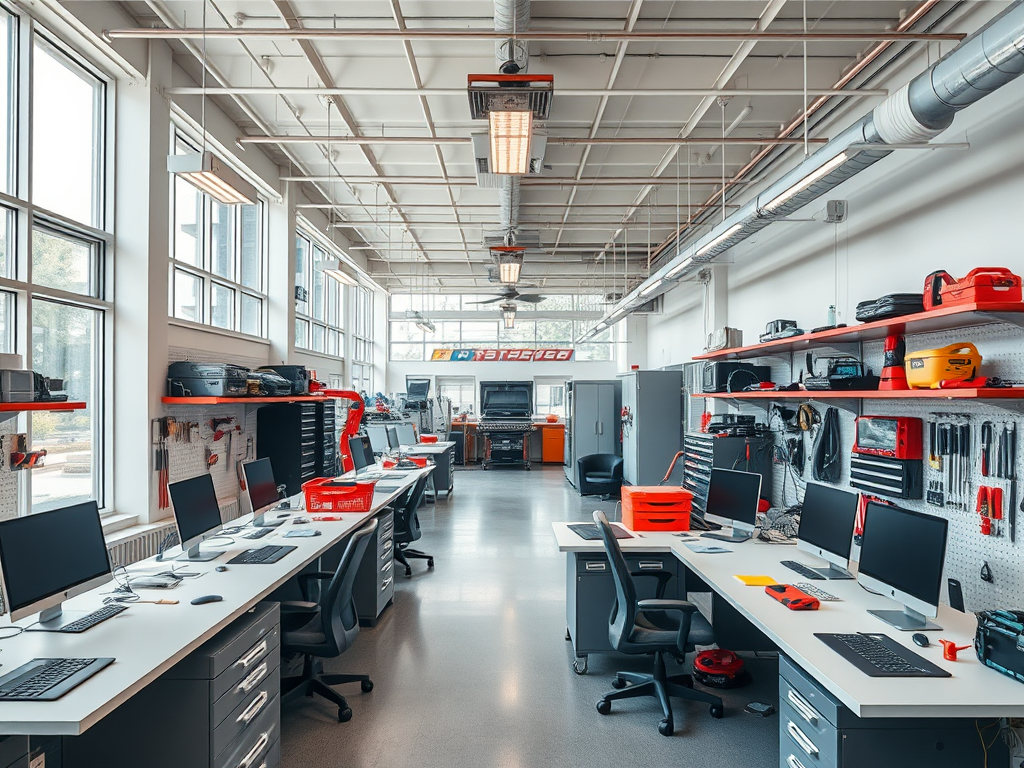
The line between “office” and “field” has blurred. For decades, workplace strategy focused on offices — flexible space, collaboration zones, hybrid work models — while service delivery focused on the depot, the van, and the site. But the reality is that both worlds are part of the same ecosystem.
In infrastructure and facilities management, the next leap forward isn’t just about flexible working for knowledge roles. It’s about creating agile workforce models that unite office, depot, and field — powered by data, collaboration, and a shared culture of safety and performance.
The new hybrid operating model
The most resilient operators now treat every employee — from the control room to the field — as part of a single connected system. This means linking planning, asset management, customer response, and reporting within one digital and cultural framework.
When delivery teams share common processes, data, and behaviours, the difference is immediate: faster response times, fewer hand-offs, and safer performance in the field.
Data and dashboards that drive decision-making
Modern workforce models rely on information that moves as quickly as the people delivering the service. Real-time dashboards, mobile reporting tools, and predictive analytics are transforming how teams operate.
In many cases, the same MI frameworks that support board governance can be adapted to depot and field use — giving supervisors and engineers the same visibility of KPIs, asset condition, and risk profiles as executives. It creates a “single version of the truth,” where data drives daily decisions, not just end-of-month reviews.
The impact? Higher first-time-fix rates, reduced travel miles, better scheduling, and measurable cost-to-serve improvements.
Workplace principles at the service edge
Workplace strategy isn’t only about real estate — it’s about creating environments that enable people to perform at their best. The same thinking applies to depots and service hubs.
Simple changes — such as improved layout, rest facilities, or digital enablement — have a direct impact on safety, wellbeing, and productivity. When frontline teams are treated as part of the “workplace experience,” engagement rises. They feel invested in, not just deployed. When people feel safe, supported, and connected, performance follows.
Integrating safety, performance, and social value
Safety is the cornerstone of any operational model. The organisations that succeed are those that see safety, performance, and social value as interdependent.
Embedding ISO 9001/14001/45001 principles across both office and field operations ensures that assurance and compliance are built in, not bolted on. In parallel, integrating community impact — local employment, apprenticeships, low-carbon travel, and inclusion — turns everyday operations into a source of measurable social value.
The leadership challenge: connecting culture and technology
Agile workforce models demand leaders who can connect the human and the digital. Technology provides the data and tools, but culture determines how effectively they are used.
As operational leaders, our role is to create clarity, accountability, and trust across dispersed teams — ensuring the safety culture that starts in the depot travels with every engineer to every site. Leadership visibility, regular feedback, and transparent communication turn process into purpose.
Closing thought

As infrastructure and FM organisations continue to evolve, the winners will be those that treat the entire workforce — office and field alike — as a single connected system. Agile workforce models are not just about flexibility; they are about building resilient, data-driven, and people-centred operations that deliver value for clients, communities, and shareholders.
The question isn’t how we manage the workplace of the future — it’s how we design operations where every workplace, from desk to depot, drives performance and purpose.
 What With These Feet
Leave a comment