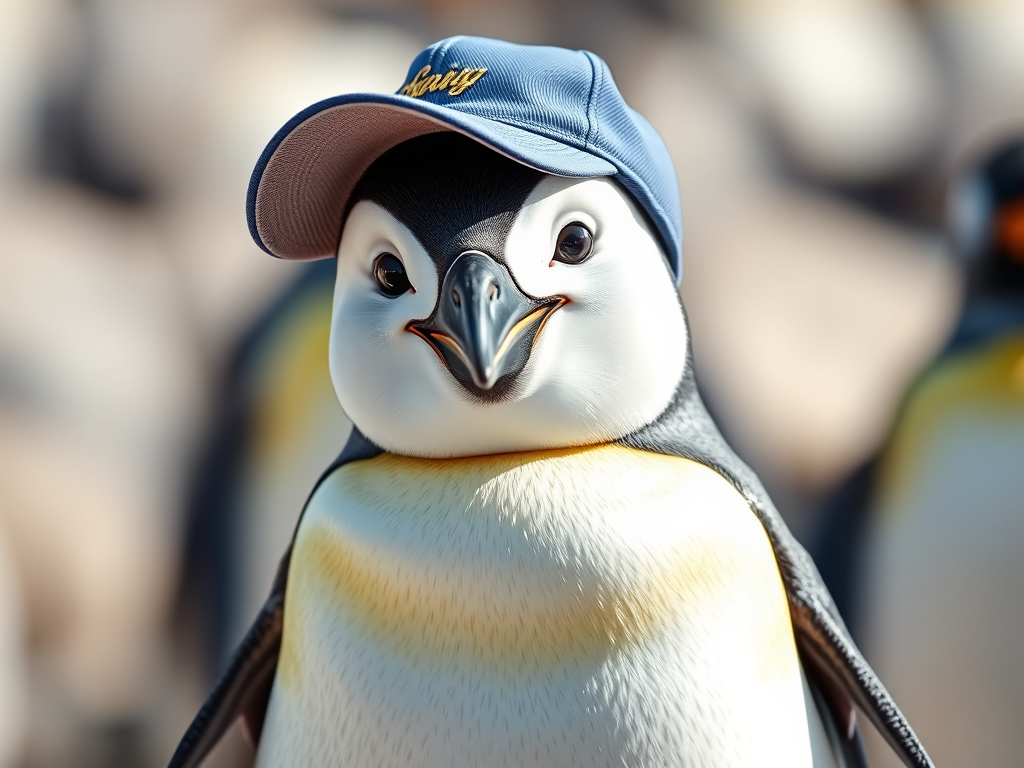
Many of us subscribe to email updates for thought leadership pieces from a variety of sources. Some are good, some are bad. It’s hard not to read one that starts with A penguin walks into the room, wearing a baseball cap and shorts—what do you say?
Earlier this week I read a note from Gary Burnison, CEO of Korn Ferry and it got me thinking.
So the email starts with “A penguin walks into the room, wearing a baseball cap and shorts—what do you say?”
Before the interviewer can continue, the candidate interjects: “What kind of penguin? There are like 18 different species…” Emperor. King. Chinstrap. Macaroni. Only once they establish it’s an emperor penguin—“they’re like four feet tall”—does the conversation move on.
As Gary explains in his email briefing (which I have copied and pasted below) , it’s never really about the penguin. Or the tuna fish sandwich. Or how many ping-pong balls fill the room. It’s about how someone engages with the unexpected. Do they freeze? Bluff? Or lean in with curiosity?
I was particularly struck by his advice to focus less on the who—even when the interviewer is an AI bot—and more on the what. Preparation, he argues, rewards us far more than perfect answers.
Whether the question is conventional or quirky, the test is the same. From “Tell me about yourself” to “an emperor penguin in shorts”, the opportunity is to show how you think. Gary’s A.C.T. reminder anchors it perfectly: Be Authentic. Make a Connection. Give others a Taste of who you are.
Because ultimately, it’s not about the question, It’s about the quality of thought behind the answer.
| Korn Ferry Special Edition: Preparing for the Great Unknown. Gary Burnison, CEO A penguin walks into the room, wearing a baseball cap and shorts—what do you say?“Excuse me,” the candidate interrupted. “What kind of penguin? There are like 18 different species. Emperor, king, chinstrap, macaroni …” He ticked them off on his fingers. “It makes a difference.”I nodded. “Let’s just say it was an emperor penguin.”“Good,” the person replied, not missing a beat. “Because they’re like four feet tall. You could probably get an emperor penguin into shorts and a baseball cap.” Over the years, when interviewing people, I’ve occasionally thrown in a quirky question. Not every time—but when my instinct tells me, I bring in a mindbender. Another favorite—how do you make a tuna fish sandwich? Some people stare—unable to figure out why I’d ask such a thing. Others launch into a story about why they toast the bread or wax philosophical about the importance of pickle relish.Frankly, it’s not about the question, but how engaged we are with it. Questions will range from the intentionally obscure to the sublime. How many ping-pong balls would fill the room? How many quarters would it take to reach the top of the building? What could you teach someone in less than a minute?The questions differ, but their purpose is the same: revealing how you think—especially when confronted with the unexpected. By processing and puzzling it out in real time with the interviewer, you’re showcasing engagement, curiosity and thinking style. Whether an interview is with a bot or a human, it’s all the same. There’s no need to predict every question in all its permutations. It’s about putting our trust in preparation.In fact, I received a call this week from someone nervous about an upcoming interview. The issue: the interviewer would be an AI-powered bot—and the person was worried about relating to something that wasn’t human.“Instead of focusing so much on ‘who,’ try thinking about the ‘what,’” I suggested. Because the great unknown rewards prepared minds far more than perfect answers.Now, let’s turn to the expected: the standard fare of predictable questions that are the staple of every interview. They’re likely to be asked, in some form or flavor. While some may say they’re cliché, let’s remember that interviewers ask them for a reason. They’re listening for signals—how you think, how you behave, what motivates you, how you’re wired … So, let’s take a closer look. Tell me about yourself. This one is all about connection. Start with something personal—where you were raised, what makes you unique, why you do what you do. Everyone has a story to tell. What’s your greatest career accomplishment? The interviewer is looking for results—as well as resilience. Keep it tight—a concise story about overcoming a problem or realizing an opportunity. What are your strengths? This one is all about self-knowledge. Don’t resort to hyperbole, focus on real accomplishments. What are your weaknesses? Don’t fall for the trap of the humble brag disguised as a flaw: “I work too hard.” “I’m a perfectionist.” “I care too much”… Share something you really learned about yourself to illustrate your accountability and willingness to grow and learn. Why do you want to work here? This is the time to demonstrate the homework you’ve done—and the passion you have for the company. Do you have any questions for us? Make no mistake: you do need to ask questions. This isn’t merely a formality. Interviewers are looking for your motivation and your ability to discern. Better yet, weave in your questions throughout the interview—and make it a conversation. Your “TV interview” … So, for each of these questions you just know you’re going to be asked, set a timer for two minutes and bullet out what you want to highlight. Read, reflect, and revise what you’ve written—then video record yourself answering each question. Then do it again … and again. Remember, in a television interview, a person gets about 20 to 40 seconds to make a point. Salient and concise answers—that’s the goal here.And with every response, remember how you A.C.T. Be Authentic. Make a Connection. Give others a Taste of who you are. Amid the expected and the unexpected—the quirky questions and the rote—there will always be you. And preparation is our bridge. Because the great unknown isn’t about the questions. It’s the quest to prepare our minds. |
 What With These Feet
Leave a comment