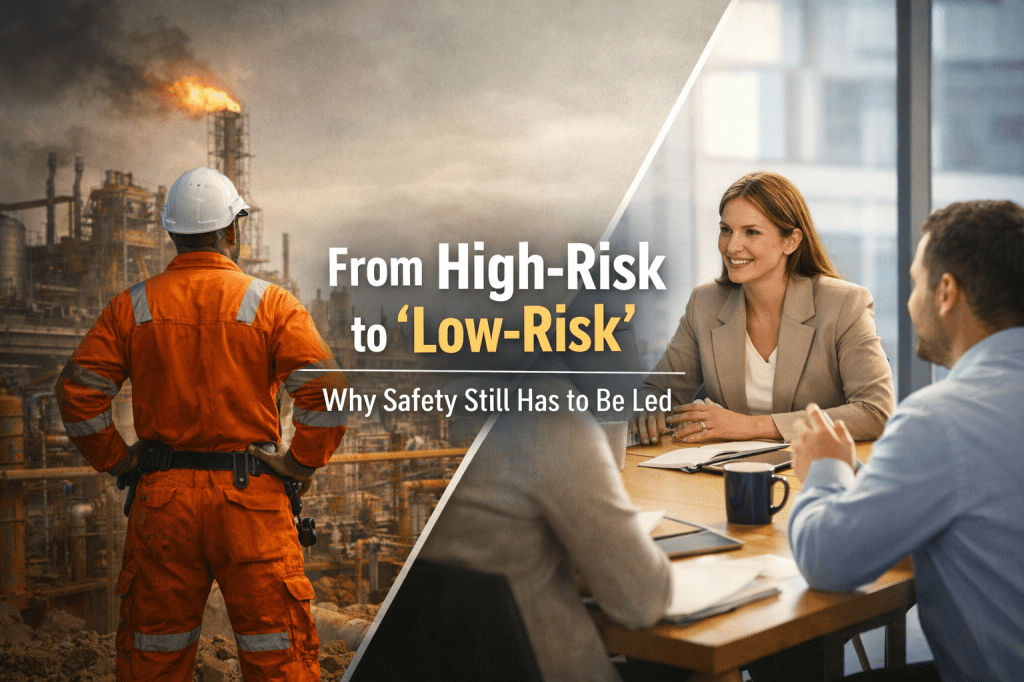

When you’ve grown up professionally in higher-risk environments, health and safety leadership is instinctive. It’s visible, structured, and non-negotiable — because the consequences are immediate.
Moving into a sector that’s perceived as “lower risk” requires a different approach. Not because safety matters less or is considered less, but because it’s easier for it to become optional: something you do to be compliant, rather than something you live by every day to make a difference.
In professional services, the risks are often quieter but just as real: fatigue from long hours, driving after late meetings, travel, lone working, stress, poor workstation set-ups, slips/trips in busy offices, and the gradual normalisation of “pushing through”. These rarely feel dramatic—until something happens.
Leadership Culture
That’s why a leadership culture of health and safety can’t rely on policies alone. It has to be led, and it has to be consistent.
For me, the shift is simple: less “compliance messaging”, more “leadership habits”. Small signals, repeated often, that tell people what matters.
Here are a few practices that make a difference quickly:
– Start key meetings with a 60–90 second safety/risk moment (travel, fatigue, site visits, office hazards, wellbeing).
– Make escalation safe: “Bad news early is good news.”
– Reward reporting and learning, not silence and blame.
– Fix one thing visibly each month so people see that speaking up leads to action.
– Role-model the basics: pace, breaks, safe travel choices, and stopping work when something feels off.
Because culture is built in what leaders consistently do — not what they occasionally say. In a “lower risk” sector, leadership on health and safety isn’t less important. It’s more important — precisely because it’s easier to treat it as optional.
 What With These Feet
Leave a comment